September 22, 2026
PetSafe® Expert
PetSafe® Guest
Dog Wellness Exam: What It Includes, Costs, and How Often
A dog wellness exam is the routine checkup that keeps a healthy dog healthy. The real value of the visit is finding problems early, while they are still easy and affordable to treat. This guide covers what the exam includes, what it costs, how often your dog needs one, and how it changes from puppyhood through the senior years. For the big picture across both species, start with our guide to pet wellness exams.
Key points
- A dog wellness exam is a routine, nose to tail health check for a dog that seems healthy, not a visit for a specific problem.
- Most healthy adult dogs need one wellness exam a year. Puppies need a series of visits every three to four weeks, and senior dogs usually need two visits a year.
- A basic exam fee commonly runs about $50 to $150, though a full visit with vaccines and testing can total more.
- Size matters more than age. Large and giant breed dogs reach their senior years earlier, often around five to six years old.
- Dogs instinctively hide discomfort, so the physical exam and screening tests often catch problems before you would notice them at home.
In this article
- What is a dog wellness exam
- What happens during a dog wellness exam
- How much does a dog wellness exam cost
- How often does a dog need a wellness exam
- Puppy wellness visits, the first year
- Senior dog wellness exams
- Breed and size considerations
- How to prepare for the visit
- Frequently asked questions
What is a dog wellness exam?
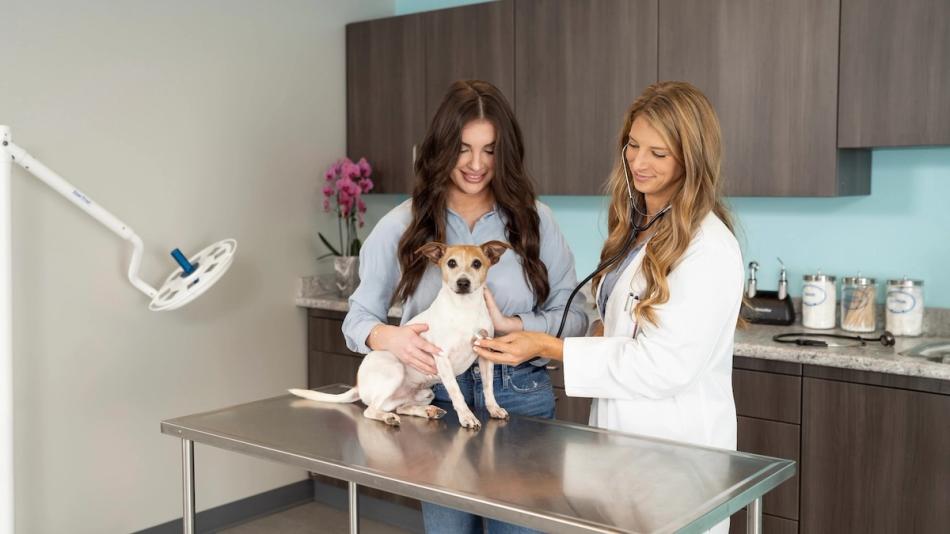
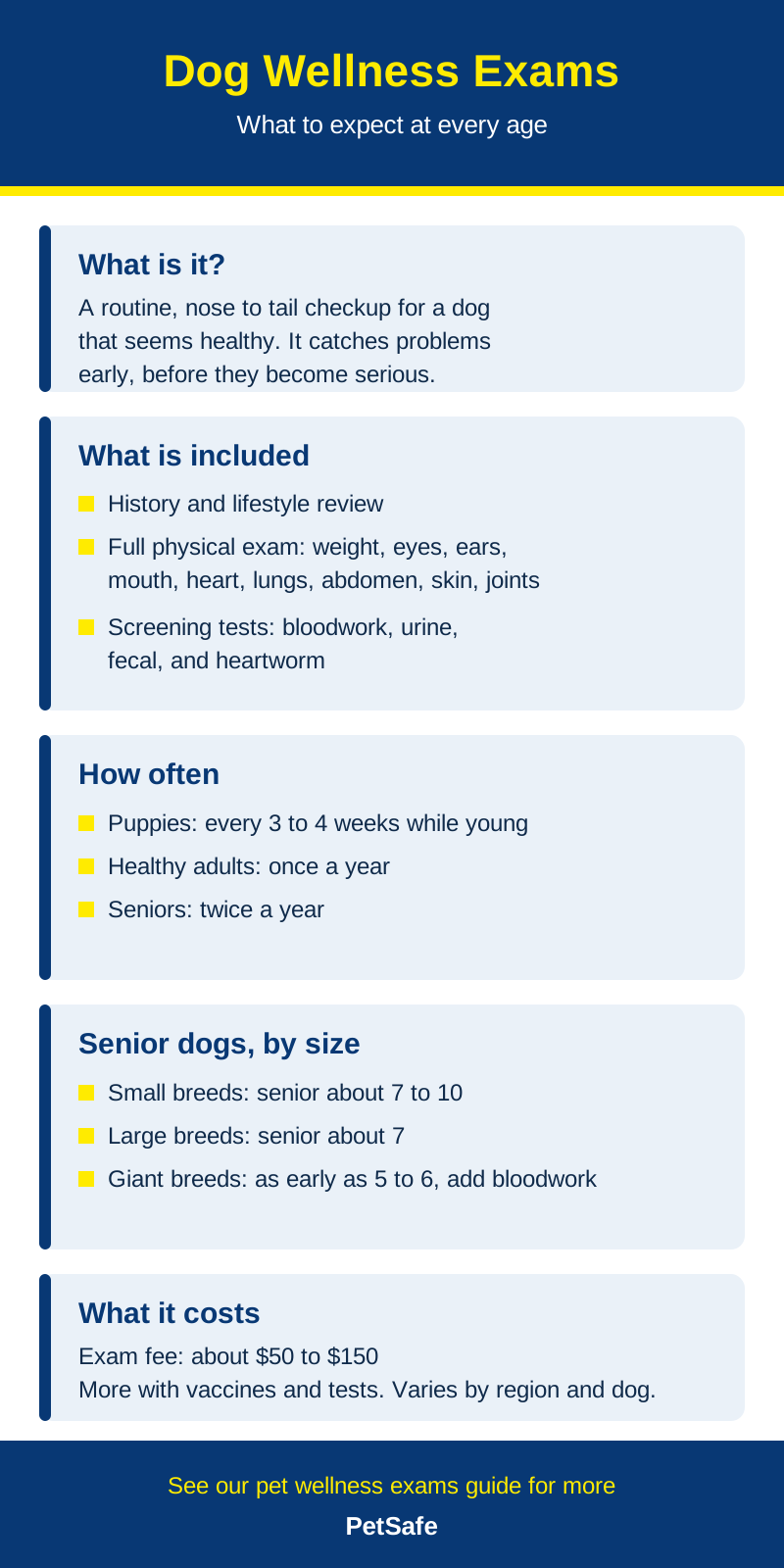
A dog wellness exam is a routine veterinary checkup for a dog that appears healthy. The veterinarian reviews your dog's history, performs a nose to tail physical examination, and may recommend screening tests. The goal is preventive: to catch disease early, keep vaccines and parasite protection current, and build a baseline your veterinarian can compare against at future visits.
This is different from a sick visit, which addresses a specific symptom such as vomiting or a limp. A wellness exam is scheduled when nothing seems wrong, precisely because dogs are so good at masking early illness and pain. A change you might read as your dog simply slowing down can be one of the earliest signs of a treatable problem [1].
What happens during a dog wellness exam?
A wellness visit has three parts: your dog's history, a physical examination, and any recommended screening tests.
History and lifestyle. Your veterinarian will ask about diet, appetite, thirst, energy, bathroom habits, exercise, behavior, travel, and anything that has changed at home. Your observations are part of the exam, so come ready to share them.
The physical examination. A thorough head to tail check typically covers weight and body condition, temperature and breathing, eyes, ears, nose, and mouth including the teeth and gums, heart and lungs, the abdomen by gentle feel, skin and coat, lymph nodes, and joints and mobility [3]. Pain and nutritional assessment are folded into each step.
Screening tests. Depending on age and risk, your veterinarian may recommend a complete blood count and chemistry panel, a urinalysis, a fecal test, and heartworm and tick borne testing [3]. In a healthy dog these set a baseline, and tracked over time they reveal trends long before your dog looks sick.
How much does a dog wellness exam cost?
The exam fee itself, the charge for the veterinarian's time and the physical examination, commonly runs about $50 to $150 in the United States. A full visit that adds vaccines, a fecal test, and heartworm screening totals more, and national averages that blend everything together tend to land in the low hundreds of dollars for dogs [4][2]. Add on tests are priced separately, so ask for an estimate when you book.
Cost varies with what is included, your dog's life stage, where you live, and the type of practice. One note on insurance: standard accident and illness pet insurance does not cover routine wellness care, so exam and vaccine costs are usually out of pocket unless you add a wellness plan. Our pet wellness exams guide covers this in detail.
How often does a dog need a wellness exam?
Frequency depends on life stage:
- Puppies. A visit every three to four weeks from about six to eight weeks until at least sixteen weeks, tied to the vaccine series and parasite testing.
- Healthy adults. At least one full wellness exam a year, the standard recommendation from the American Animal Hospital Association [1].
- Seniors. Two visits a year, since organ function can change within six months in an older dog, so twice yearly bloodwork catches problems early [1].
For a broader look at care through every life stage, see our guide to responsible pet ownership.

Puppy wellness visits, the first year
A puppy's first year brings the busiest stretch of vet visits he will ever have. The first exam usually happens around six to eight weeks of age, then visits repeat every three to four weeks until at least sixteen weeks, so the core vaccine series can build immunity as inherited protection fades [4]. Along the way your veterinarian checks growth, screens for parasites, starts flea, tick, and heartworm prevention, and looks for congenital issues such as a heart murmur.
These visits are also the time for advice on feeding, house training, and socialization while your puppy is young enough for it to stick. Line up the essentials with our new puppy checklist, and find reward based methods in how to train a puppy. Spay and neuter timing is usually discussed between six and twelve months, with large and giant breeds often waiting a little longer. Once the series is complete, a dog settles into a yearly schedule. For the shots themselves, see the basics on pet vaccines.
Senior dog wellness exams
Most dogs are considered senior around seven years of age, but size matters more than a birthday. Small breeds may not get there until nine or ten, while large breeds reach it around seven and giant breeds as early as five to six [1]. A six year old Great Dane is a senior, while a six year old small breed dog is still middle aged.
Once a dog is senior, an annual visit is no longer enough. Veterinarians generally recommend two wellness exams a year plus screening bloodwork every six to twelve months. A typical senior panel adds a complete blood count, a chemistry panel for kidney and liver function, a thyroid test, and a urinalysis, with blood pressure measurement for many dogs [1][3]. Your veterinarian also watches weight, joints and mobility, dental health, and behavior more closely. Arthritis, dental disease, heart disease, and certain cancers all become more likely with age, and catching them early is what twice yearly visits are for.
Breed and size considerations
Because larger dogs age faster, breed and size shape both the schedule and what your veterinarian watches for. Large and giant breeds carry a higher risk of joint problems such as hip dysplasia and cruciate ligament injury, and some face higher rates of certain cancers and heart conditions, so weight and joint monitoring matter early. Small breeds tend to live longer but are more prone to dental disease. Temperament matters too, since a calm, well handled visit produces a more accurate exam, and knowing your dog's normal behavior helps you spot changes. Our guide to understanding dog behavior is a good primer.
How to prepare for the visit
A little preparation makes the appointment smoother and more useful:
- Bring your dog's records, including vaccine history, if the clinic is new to you.
- Collect a fresh stool sample if your veterinarian requested one.
- Write down your questions and any changes you have noticed at home.
- Note your dog's current food, treats, and any medications or supplements.
- If bloodwork is planned, ask whether your dog should fast beforehand.
- Bring your dog on a secure leash and a well fitted collar or harness. If you are choosing between them, see our comparison of a dog harness versus a collar.
Frequently asked questions
What is a dog wellness exam?
A dog wellness exam is a routine checkup for a dog that appears healthy. Your veterinarian reviews your dog's history, performs a nose to tail physical examination, and may recommend screening tests to catch problems early and set a baseline for future visits.
What does a dog wellness exam include?
A typical visit includes a history and lifestyle review, a full physical examination covering weight and body condition, temperature, eyes, ears, mouth, heart, lungs, abdomen, skin, and joints, and, depending on age and risk, screening tests such as bloodwork, a urinalysis, a fecal test, and heartworm testing.
How much is a wellness exam for a dog?
The exam fee alone commonly runs about $50 to $150, while a full visit with vaccines and testing can total more. Cost varies by region, type of practice, your dog's life stage, and which tests are included.
How often should a dog have a wellness exam?
Most healthy adult dogs need one wellness exam a year. Puppies need a visit every three to four weeks during their first months, and senior dogs generally benefit from two exams a year.
What does a senior dog wellness exam include?
In addition to the standard physical exam, a senior dog visit usually adds screening bloodwork, a urinalysis, a thyroid test, and often a blood pressure check, along with a closer look at weight, joints, mobility, and behavior. Most senior dogs are seen twice a year.
How many vet visits does a puppy need in the first year?
Puppies typically need a wellness visit every three to four weeks from about six to eight weeks of age until at least sixteen weeks, to complete the core vaccine series and parasite screening. After that, a yearly wellness exam is the standard.
Does my dog need a wellness exam if he seems healthy?
Yes. Dogs are very good at hiding early illness and pain, so a dog that seems healthy can still have a developing problem. The physical exam and screening tests are designed to find those issues while they are easiest to treat.
Citations and sources
- American Animal Hospital Association (AAHA), Canine Life Stage and Senior Care Guidelines. aaha.org
- American Veterinary Medical Association (AVMA), preventive care and pet owner economics. avma.org
- VCA Animal Hospitals, wellness examination and wellness testing for dogs. vcahospitals.com
- Pawlicy Advisor, veterinary visit cost overview. pawlicy.com


Get Email Updates
Subscribe to the latest news, promotions, & more from PetSafe® brand.
Sign up today for the latest news, promotions, and more from PetSafe® brand.